The Energy Challenge We're Solving
*** THE SAME CHALLANGE *** America's energy grid faces unprecedented pressure. Aging infrastructure, climate volatility, and rising costs demand a new approach — one that is clean, resilient, and locally controlled.
The Problem / CHALLANGE
The United States power grid was built for a different era. Centralized generation, long transmission lines, and fossil-fuel dependence create systemic vulnerabilities. When the grid fails — from storms, wildfires, or demand spikes — communities lose power for days or weeks. The economic and human cost is enormous.
Grid Fragility
Aging transmission infrastructure is increasingly vulnerable to extreme weather events, cyberattacks, and cascading failures that leave entire regions without power.
Price Volatility
Fossil fuel markets are inherently volatile. Municipalities and businesses face unpredictable energy costs that make long-term planning difficult and budgets unstable.
Carbon Emissions
Conventional power generation remains a leading source of greenhouse gas emissions, driving the climate change that itself threatens grid stability — a dangerous feedback loop.
Energy Inequity
Rural communities, small towns, and underserved populations often bear the highest energy costs and the least reliable service, limiting economic opportunity.
The MicroGrid Solution
Microgrids change the equation. By combining solar generation, battery storage, and intelligent controls, a microgrid can operate in parallel with the utility grid — or completely independently in 'island mode' when the grid goes down. This is not a future technology. It is available today.
Energy Resilience
A microgrid keeps critical facilities — hospitals, water treatment, emergency services — running even when the main grid fails.
Cost Predictability
Solar generation combined with a Power Purchase Agreement locks in electricity costs for 20–25 years, eliminating exposure to fuel price swings.
Federal Incentives
The Federal Investment Tax Credit and MACRS Accelerated Depreciation make solar projects financially compelling for municipalities and private landowners alike.
Local Control
Communities that own or host their own generation assets gain energy sovereignty — the ability to make decisions about their power supply without dependence on distant utilities.
How a Microgrid Works
A microgrid integrates multiple energy sources — solar panels, battery storage, backup generators, and sometimes wind or hydrogen — into a single intelligent system. The microgrid controller continuously balances supply and demand, drawing from the cheapest and cleanest source available, storing excess energy, and seamlessly switching to island mode when the main grid is unavailable.
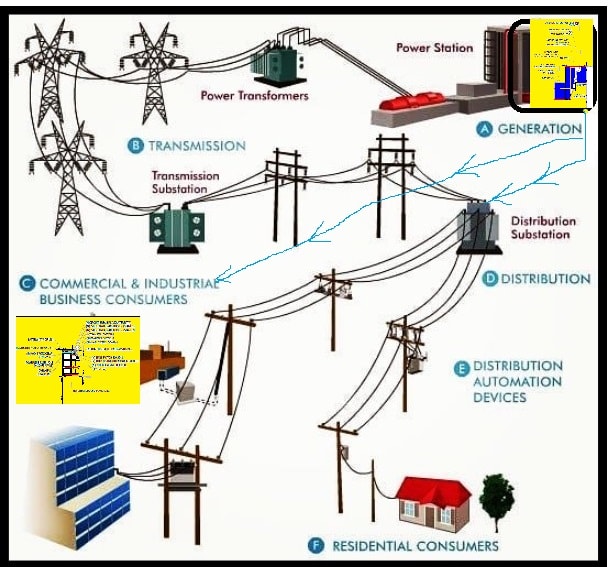
MicroGrid system diagram: interconnected energy sources managed by intelligent controls
Let's Solve It Together
MicroGrid USA has the expertise, the relationships, and the track record to take your community or land from challenge to solution. Let's talk.
Contact Us